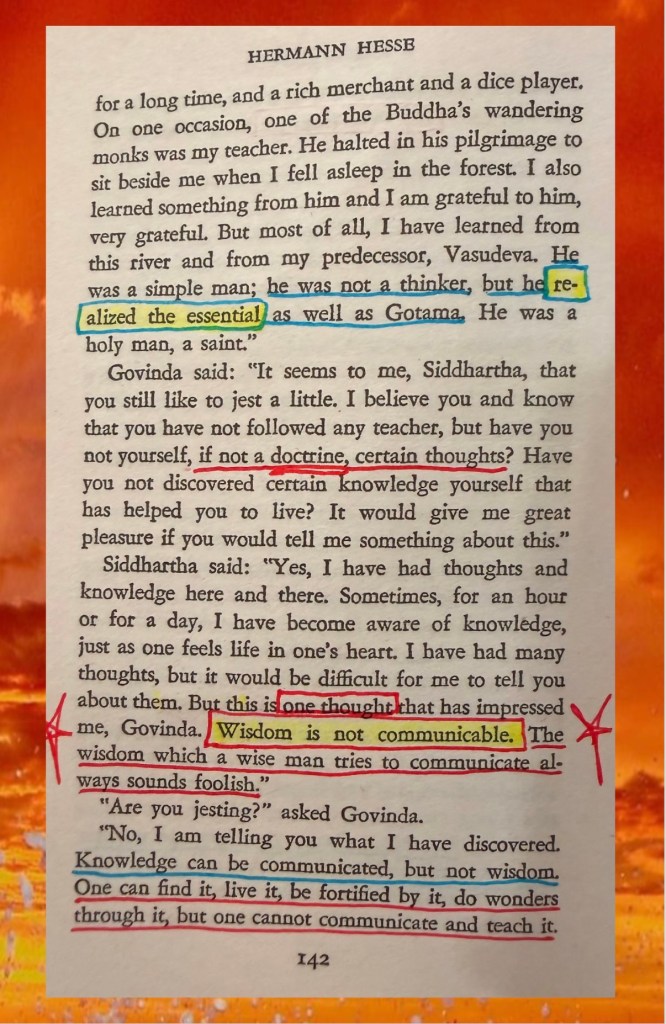
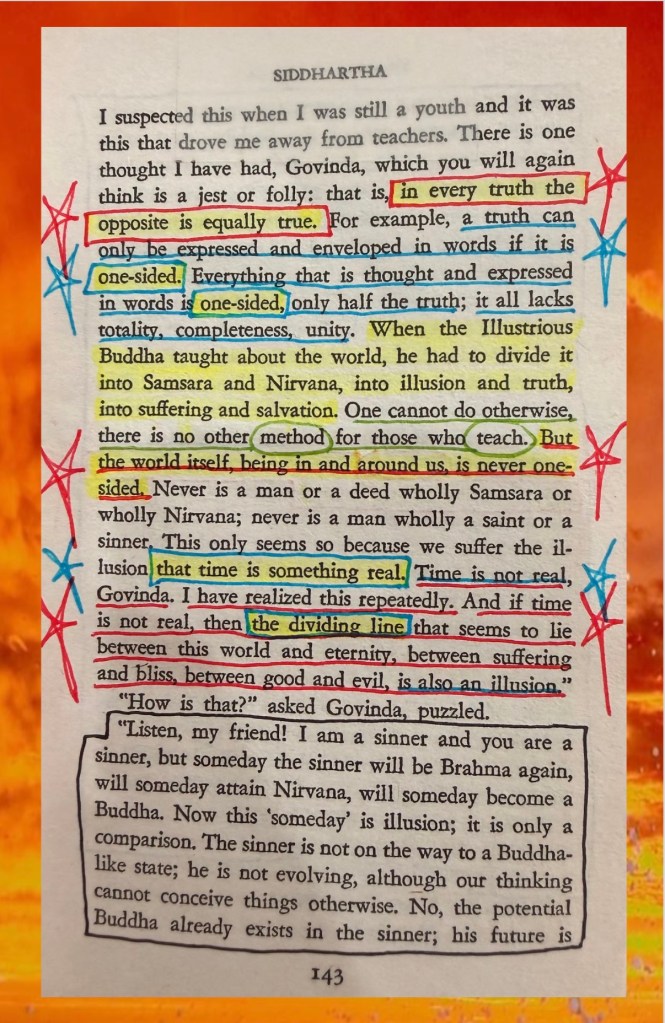
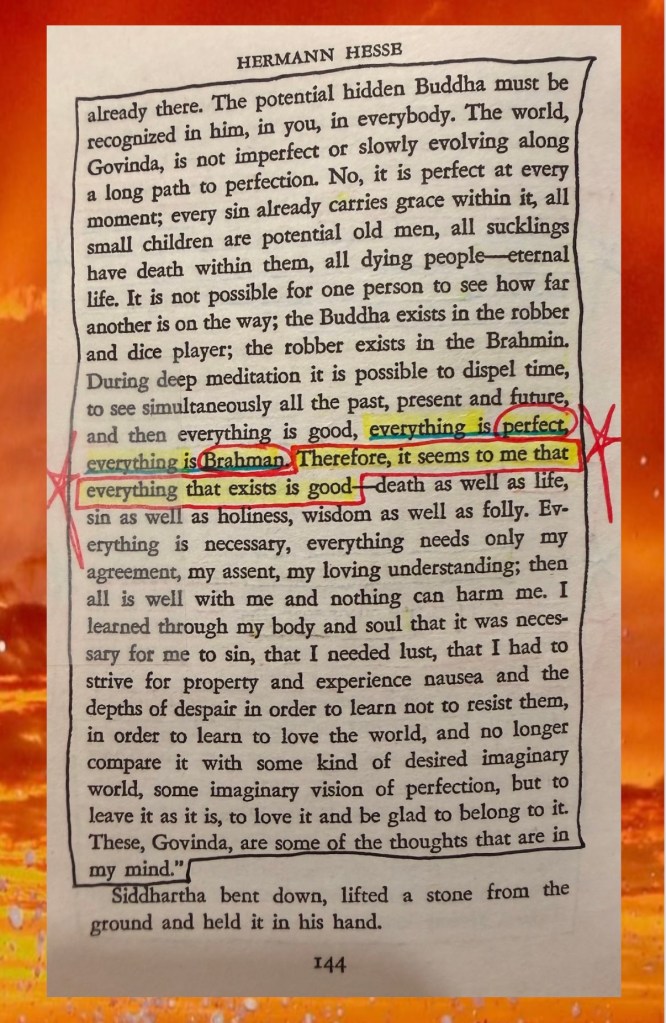
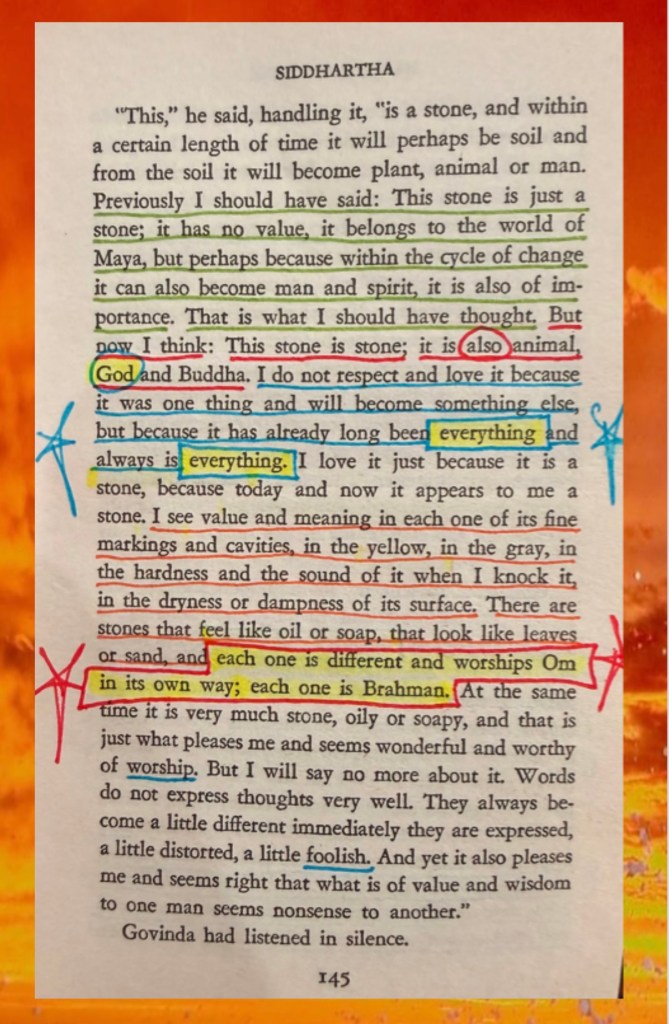
This is a distillation of the wisdom of a book that tells us “wisdom is not communicable” (142), and then proceeds to tell us quite a lot of important clues to this great spiritual secret that is present at the heart of the heart of absolutely everything.
I’m using my own marked-up text, folly available on a Google Slides presentation here: Siddhartha. Check it out!
Siddhartha is an influential book, a timeless classic spiritual bildungsroman. It’s a novel whose protagonist represents our own desire for spiritual progress, and embodies the Protean struggle we all have with understanding and appreciating the possibility and the reality of Enlightenment.
The way this works is I share bits of the text itself, selected and presented in one possible configuration (though of course there are others, and everyone’s own criterion for selection and presentation may vary widely), with little interruption of the text itself.
This Selection
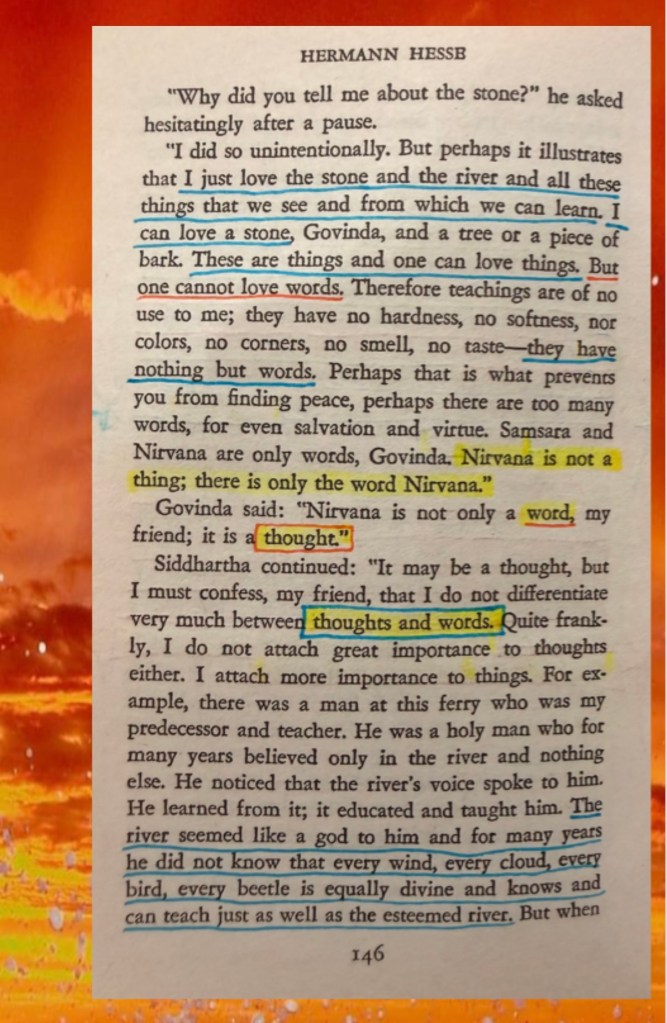
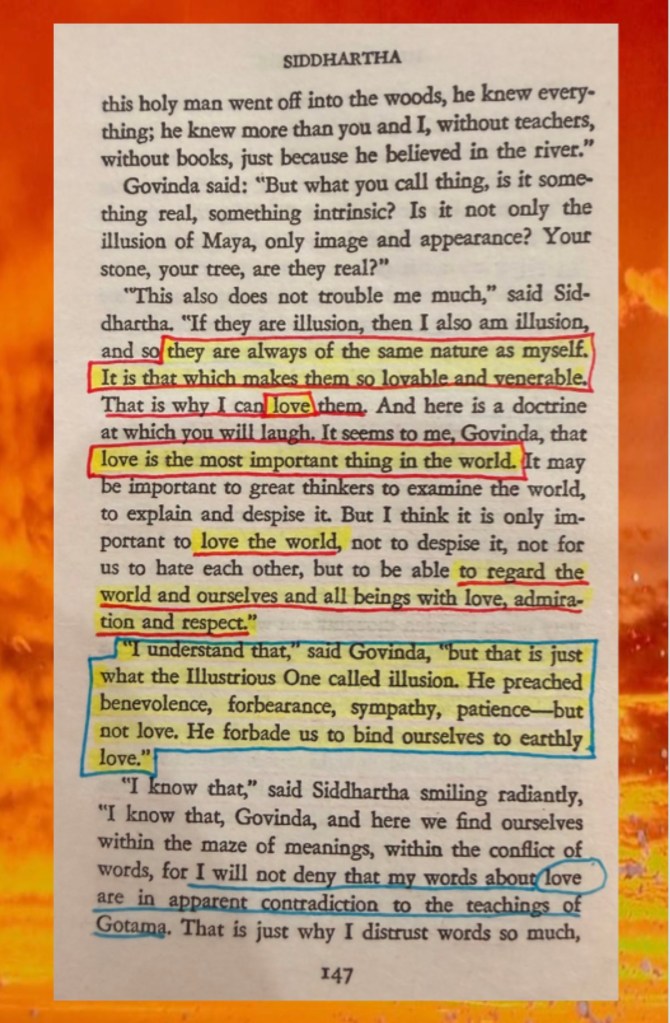
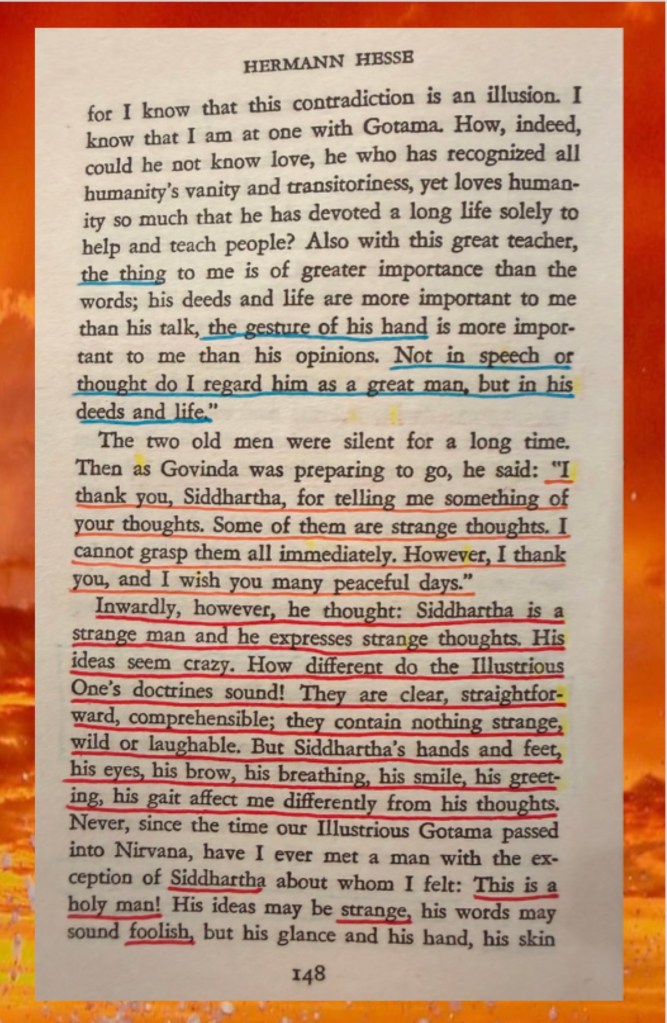
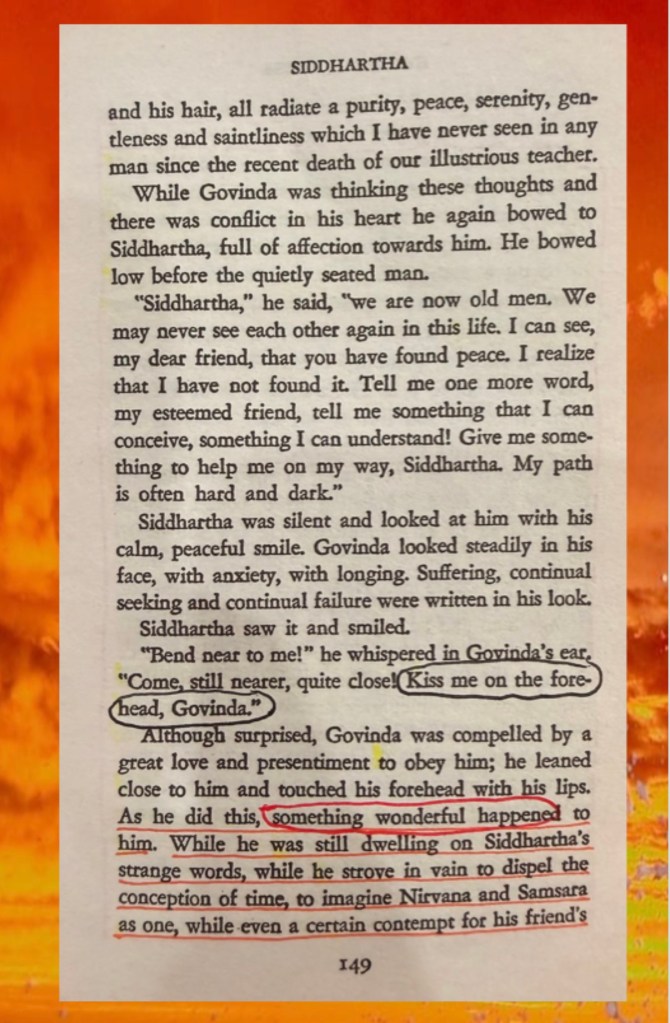
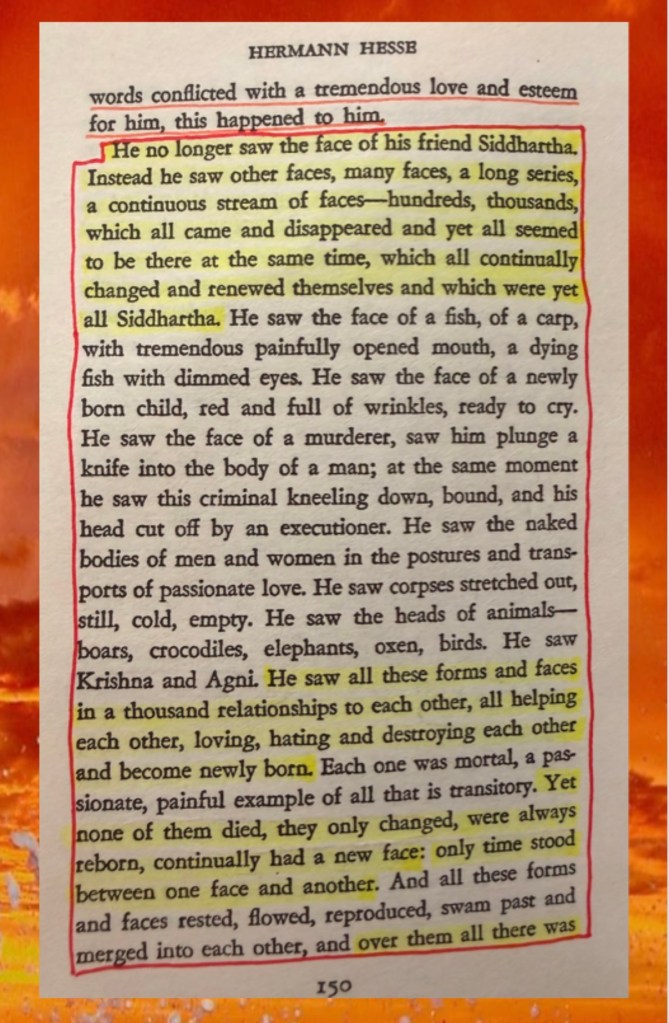
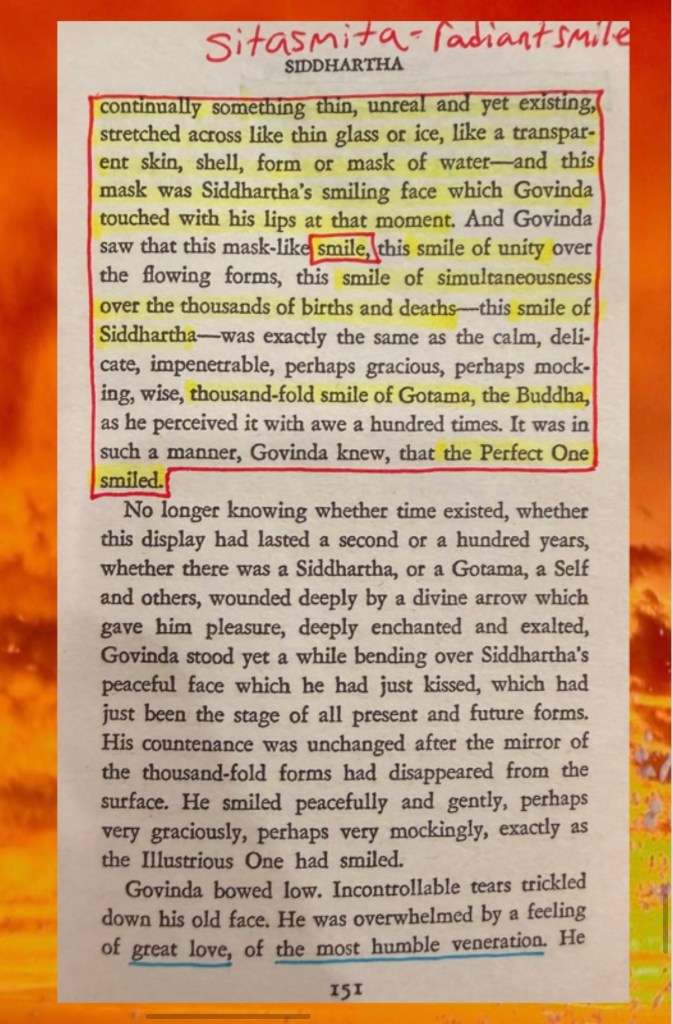
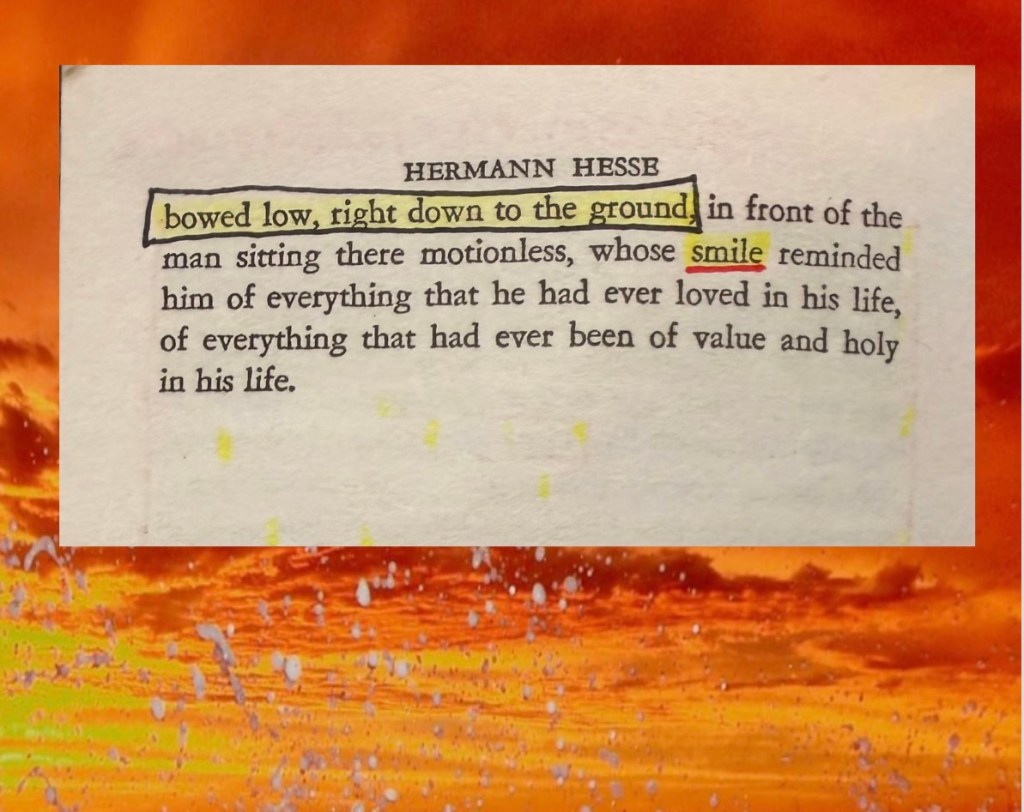
I have chosen to focus on wisdom that is found towards the end of the book. The whole thing’s great, and the narrative is what one usually appreciates most about novels, but I’m focusing on the philosophical discussion at the end of the book, and so focus on the penultimate chapter “Om” (129-137) and the final chapter, “Govinda” (139-152).
Finally, as a key to this reading of the text, I have chosen the thematic nexus of items pertaining to (1.) the “secret art of thinking” (and waiting, and fasting) found throughout the text, and (2.) the bit about wisdom being incapable of communication. The rationale for focusing on these two themes is that a reader who is very serious about mining this book for wisdom will benefit from Hesse’s and Siddhartha’s struggle to indicate the incredible possibility that lurks incognito in cognition (1.), capable of activating the strange kind of engine that is the transmission of Supreme Spiritual Enlightenment (2.).
Presentation of Selections
The important thing about chapter 1, “The Brahmin’s Son,” is the philosophical situation of young Siddhartha in a Brahminical culture (Atman and Brahman are mentioned already on pages 3 and 4—see Huxley’s The Perennial Philosophy for some more about such things, as well as my other Presentation Slide-Shows including key texts from Buddhism and Hinduism, such as The Tibetan Book of the Dead, Nagarjuna’s Mulamadhyamaka Karika, and Patanjali’s Yoga Sutras), and therefore Siddhartha was “already” (3) adept at the “art of contemplation and meditation,” besides the narrative setting of Siddhartha’s world (“everybody loved Siddhartha… But Siddhartha himself was not happy.” (5)).
The image of Siddhartha sitting in meditation like a taut and dynamic bow and arrow is particularly striking.
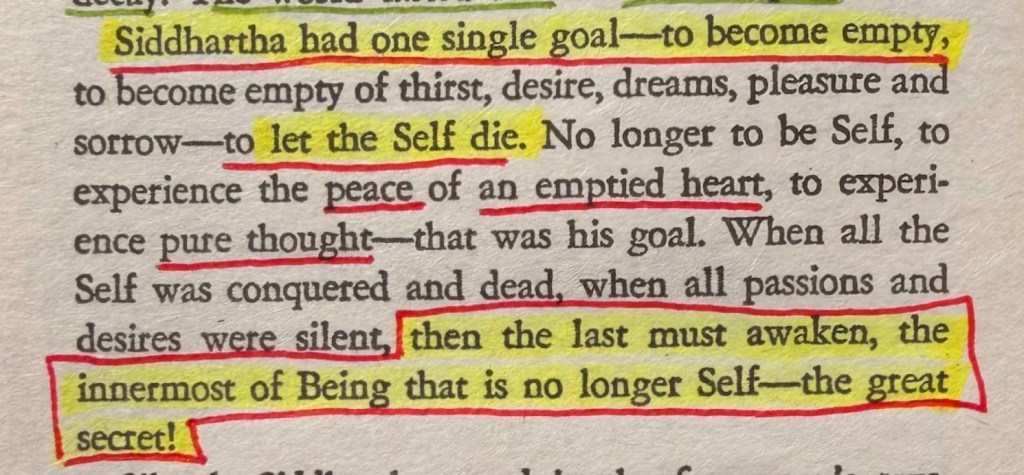
Chapter 2, “With the Samanas”has a beautiful formulation of Siddhartha’s early intention:
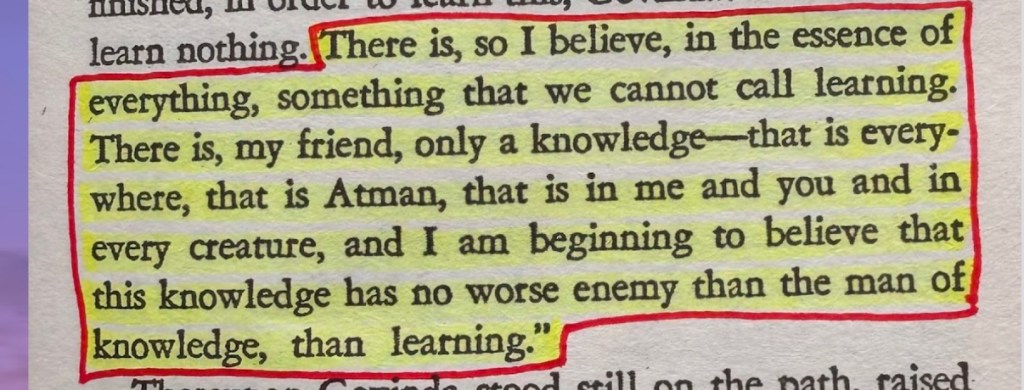
In Chapter 2 there is also an expression of the overall thesis that wisdom cannot be learned:
The exchange between Siddhartha and the Buddha Gotama Sakyamuni, the historical Buddha, in the chapter “Gotama” is very powerful, as is its reflection in the next chapter “Awakening,” but here’s a more compressed summary from the following chapter, “Kamala:”

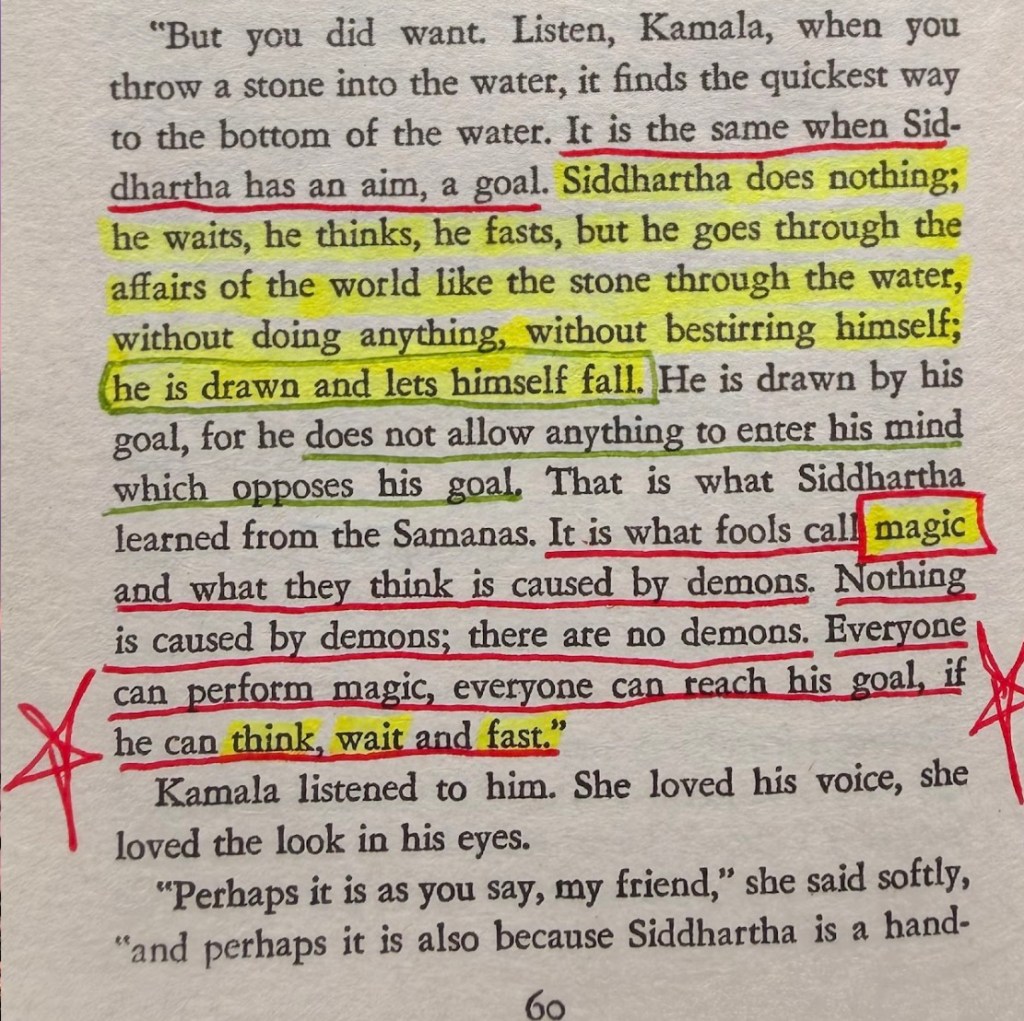
The first instance of the “think, wait, and fast” (besides the “art of contemplation” mentioned on the first page of the book) formulation appears in “Kamala” on page 56, and again on page 60:
Siddhartha grows up, goes through some changes on his spiritual path (courts Kamala, becomes a merchant, immerses himself in Samsara, then hits rock bottom), marked by some drama about a songbird who dies and yet lives again. Incidentally, this seems to be the inspiration for the Beatles’ song And Your Bird Can Sing.
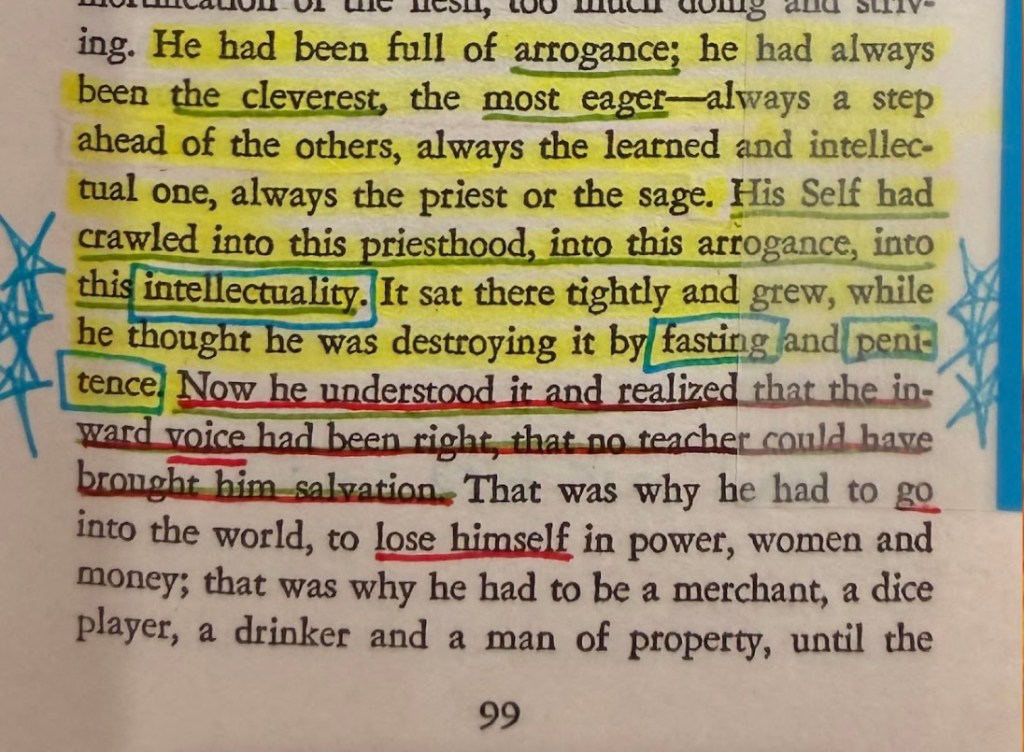
Jumping ahead to the chapter “By the River,” that formulation appears again, dressed with with the adjectives “noble and invincible,” in a chapter where Siddhartha re-thinks his relationship with thinking itself, with intellectuality:

By page 99 Siddhartha is reborn and realizes a simpler path of life:
Joining the old Ferryman Vasudeva in his way of life, Siddhartha learns to look to the river as a kind of oracle. The river possess many powers and secrets for those attuned to it:
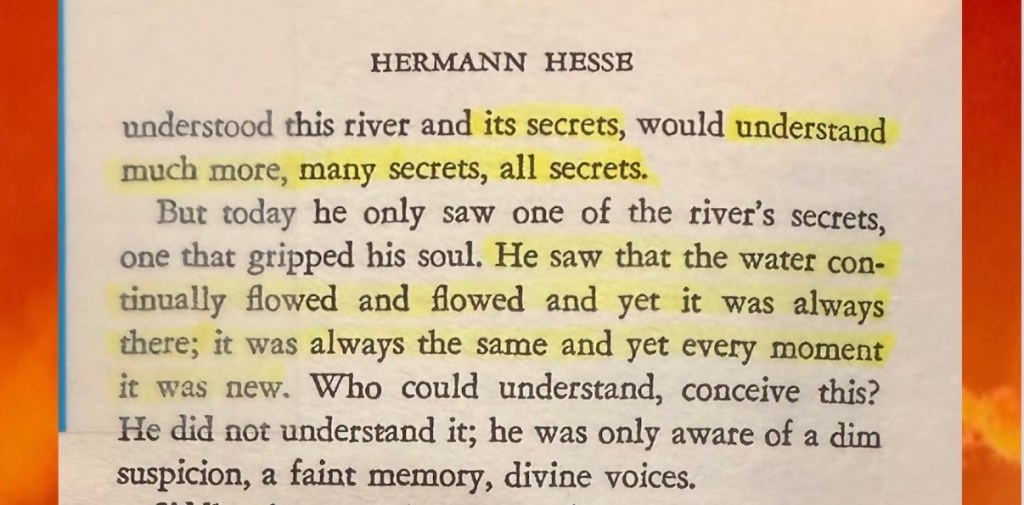
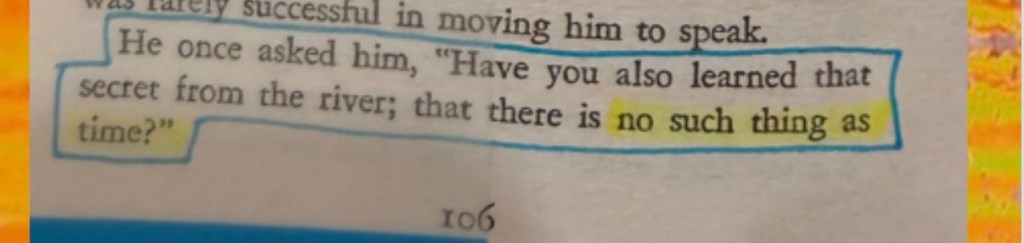
The river teaches many things to Siddhartha, and a very important lesson, it’s secret, regards the irreality of time:

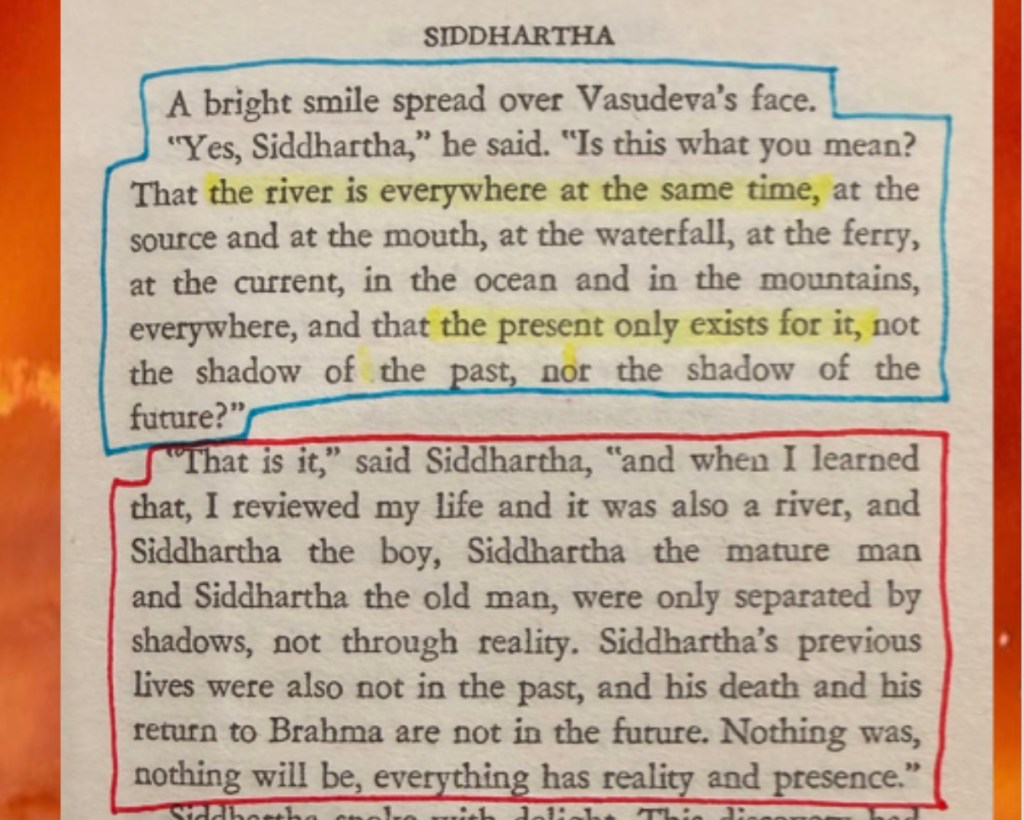
The River is Everywhere at the Same Time
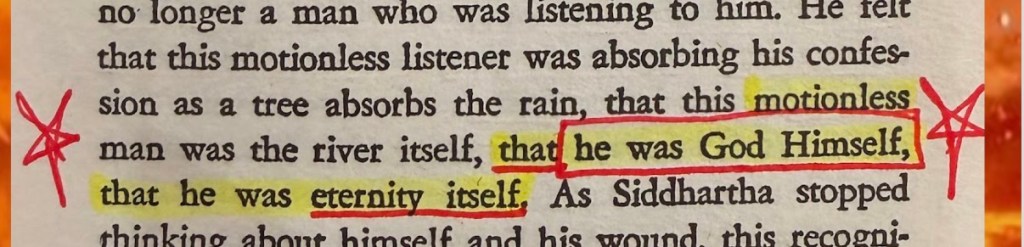
Finally, the last bits of wisdom I’d like to share come from the final chapters, where I think the most important discussion lies:
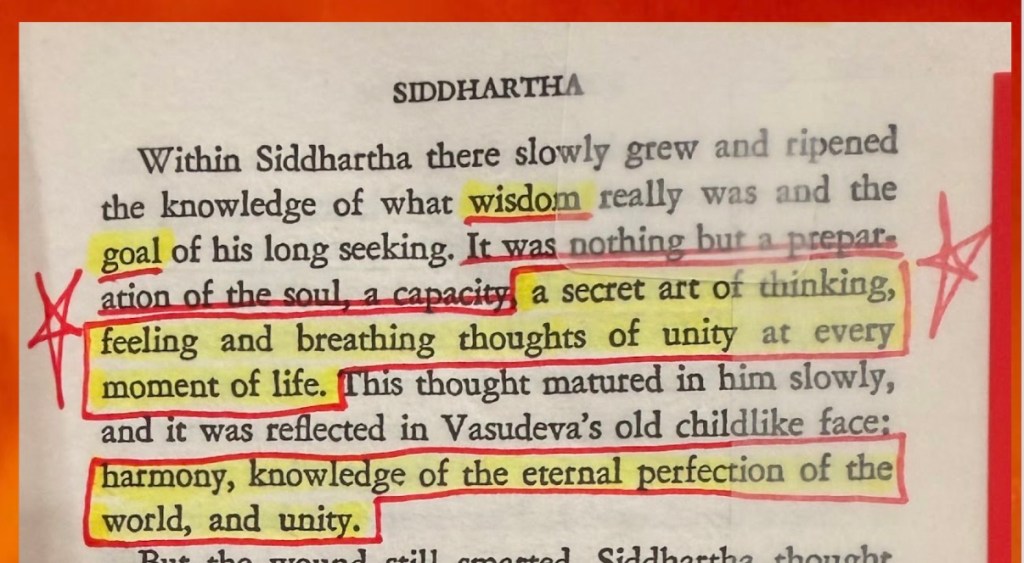

The Rest: