Thinking the Float Tank: A Unique Philosophical Experience

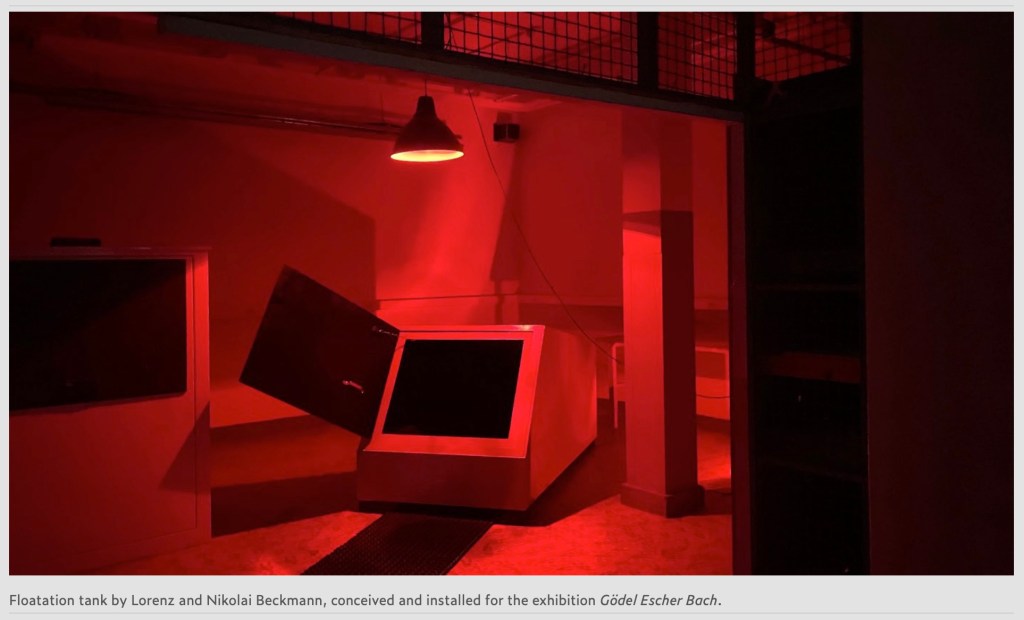
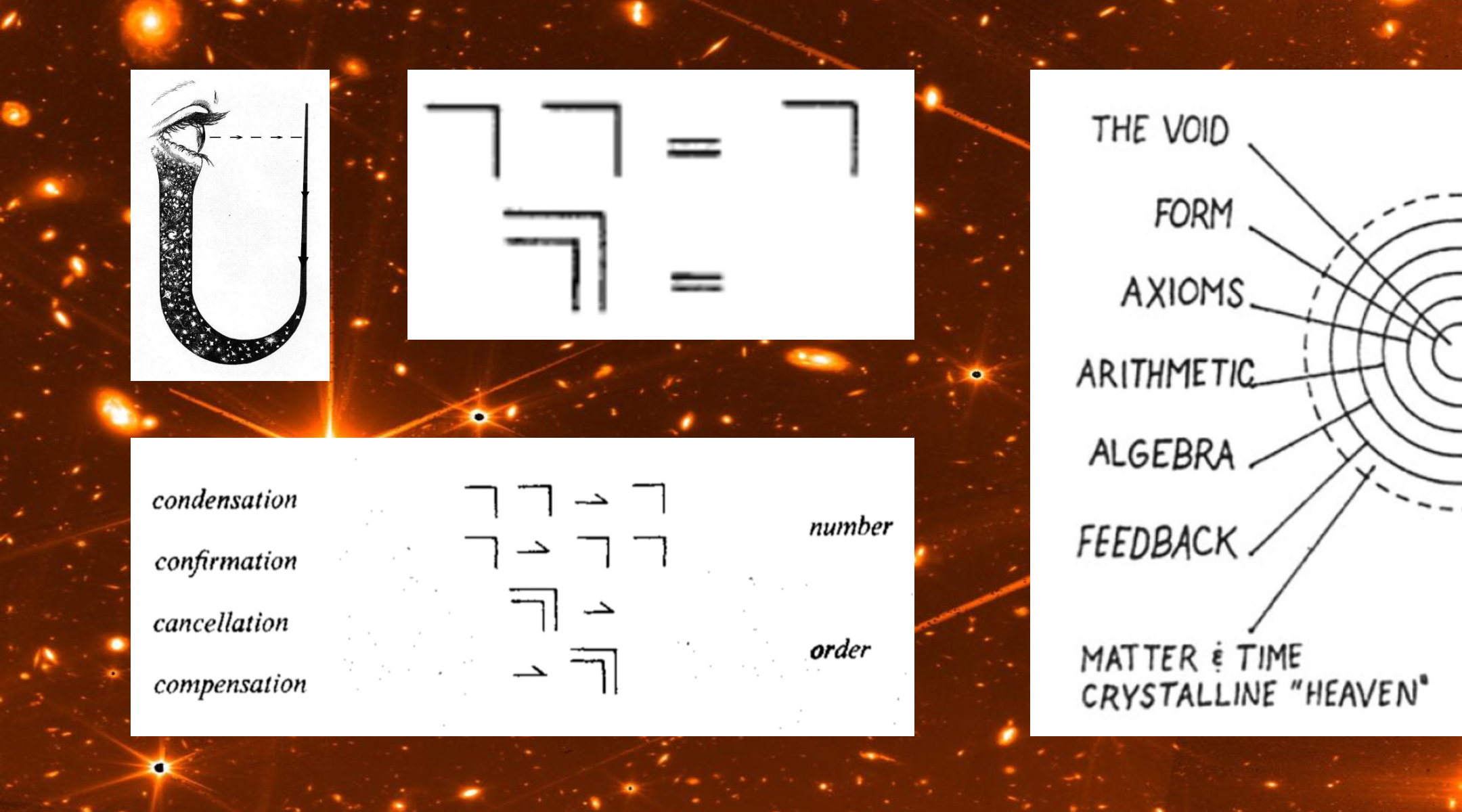
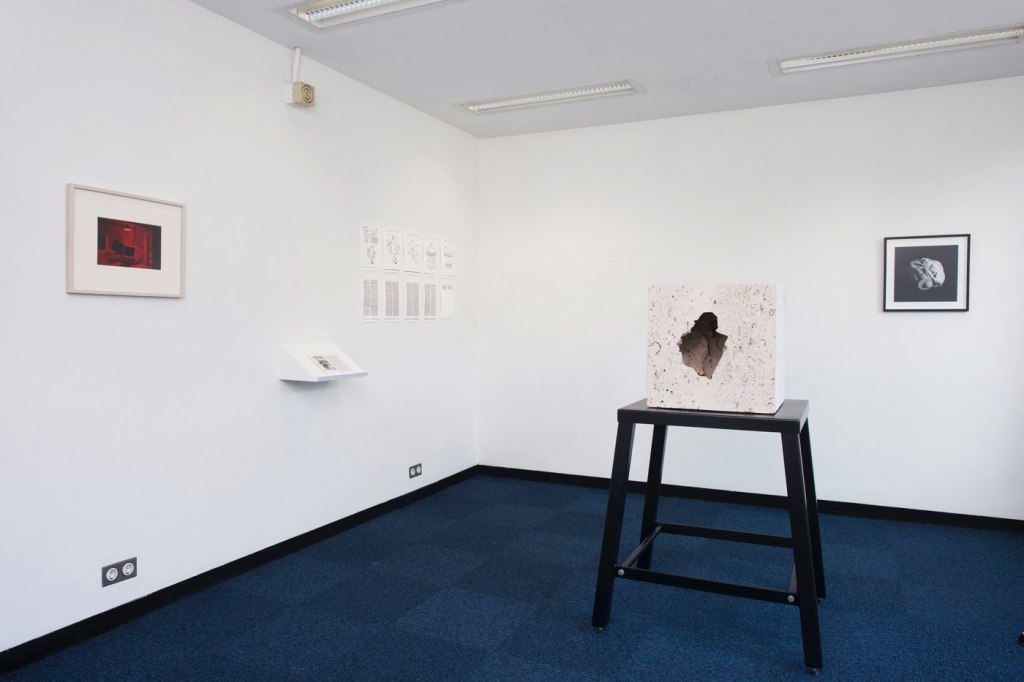
image: art installation for Thinking the Float Tank, part of the group exhibition Gödel, Escher, Bach, at West Den Haag

Thinking the Float Tank: A Unique Philosophical Experience

Philosophy aims at conjuring pure intelligence (Greek: νοῦς, nous), with the fallout being dianoetic activity or mere thinking. Ordinary thinking is sufficient for most purposes, and it is certainly enough for an academic institution and for contemporary civilization, but it is not enough for philosophy.

Art aims at conjuring invention, novelty, and creation (look to the Greek ποίησις, poiesis). Contemporary art is not only contemporary, but so far as it is true to the newness of art’s spirit it is future-facing. Contemporary artistic creations may partake of the newness of the now, of the present, but the deeper and higher presence of art in such manifestations is teleological, eschatological. The new proper to art is the elusive essence of the now and it is the ephemeral yet fixed omega point of the future.

What would be the confluence of the nous and the new? How could we capture some of its essential meaning and give it to everybody?

At summer’s end, at the contemporary art museum West Den Haag, the group exhibition Gödel, Escher, Bach will conclude its term (May 19 to August 27, 2023) with an interdisciplinary academic conference called Thinking the Float Tank: AUM Fiftieth Anniversary Conference; Cybernetics, Float Tanks, and Phenomenology Since the 1973 Esalen Institute Conference (August 24-26, 2023). 

Like the famous book by Douglass Hofstadter of the same title, Gödel, Escher, Bach is about self-reference. Escher’s art manifests self-reference in all its glorious imagination and intelligence, beyond the paradoxes and contradictions of thinking the self dianoetically and of imagining the self plainly as in a mere mirror. That paradigm of self-reference shines through Escher, through Hoftstadter, and all along its path it gives a metaphysical light on such themes as subjectivity and objectivity, the absolute infinite, nothingness, higher-order processes, transcendental reflection and speculation, and so on. That light can be caught in any curve, in any cup, especially a conceptual cup, and finally in the ancient and perennial idea of the infinite sphere. In the real reality of the human world, the cup has a rich symbolic heritage, for instance the alchemical tank, and today we can look to the history of the isolation tank, or flotation tank. This is the intention of Thinking the Float Tank. Metaphysical light will be brought to earth through the confluence of intelligence and imagination and conferred in a conference.

The occasion for this universal sense of the idea of a conference is the anticipated 50th anniversary of a magical occasion at the Esalen Institute on the coast of California in 1973. John C. Lilly, the inventor of the flotation tank, and the philosopher Alan Watts invited the mathematician George Spencer-Brown to lecture on his 1969 book Laws of Form, which Lilly had been using in the tank as a guidebook to other universes. Dubbed the American University of Masters Conference (the AUM Conference), this occasion marked a “second-order” revolution in the history of cybernetics and systems thinking, and implicitly in formal ontology as well. Laws of Form is at once advanced and basic, sophisticated and ultra-simple. A similar second-order revolution was happening in phenomenology around the same time, and both of these as well as other revolutions in contemporary civilization indicate the dynamism of cosmic forces operating world-historically over human spiritual evolution. The place of the fascinating utility of the float tank as a technology of the self (Foucault) and ritual object of meditation in this history of recent philosophy gives a face to the invisible forces of invention and intelligence underlying contemporary extra-mural philosophical activity.

In his books and in the conferences of the years following the AUM Conference, John Lilly identified his inner-tank methods built upon Spencer-Brown’s architecture as “the void method.” The 1974 and 1975 Form and Void Conferences continued the AUM momentum, and fifty years later we hope to do the same. With a workshop aimed at reconstructing the void method, with a work of contemporary art that erases its traces, Gustav Metzger’s NULL OBJECT, and with its very own flotation tank built by Nikolai and Lorenz Beckmann exclusively for this conference, Thinking the Float Tank intends to conjure in fullness that momentum and siphon it into the contemporary and future now and the dianoetic relevance of the pure philosophical nous

The news today features not only the increasingly familiar holy grail of the Information Age that is artificial intelligence, but now we are also seeing a revolution in reality and virtuality on the horizon, given for instance in the Apple Vision paradigm. Philosophy of immersion, ontology of reality, and new philosophical cosmology are no longer passive museum pieces on display for philosophers, but are inviting active participation (μέθεξις) in the philosophical and meta-theatrical sense. Theosophy and theurgy are not far from this ancient and perennial sense of philosophy.

Academic philosophy conferences capture too little of the light of pure self-reference, but if an academic philosophy conference becomes an interdisciplinary work of conceptual art about that mysterious meta-object that is the float tank, then the coalescence of invention (ποίησις) and intelligence (νοῦς) in a way that invites the highest and deepest spirit of each and every human being to participate (μέθεξις) in a new kind of thinking, we will discover something wondrous.

The path to your greatest discoveries will be by way of your greatest inventions. Come learn, invent, with us, and embark on a new direction of discovery. Thinking the Float Tank exists in a dimension parallel but perpendicular to the ordinary academic philosophy conference. Each and every person is in their deepest and highest essence a genuine philosopher and a true artist, and this truth is amplified in the float tank, where the deepest depth and the highest height coalesce.

Thinking the Float Tank: AUM Fiftieth Anniversary Conference; Cybernetics, Float Tanks, and Phenomenology Since the 1973 Esalen Institute Conference

Date: August 24-26, 2023

Location: West Den Haag, Lange Voorhout 102, 2514 EJ, Den Haag, The Netherlands

For more information, check out: Thinking the Float Tank.
Thinking the Float Tank: AUM Fiftieth Anniversary Conference; Cybernetics, Float Tanks, and Phenomenology Since the 1973 Esalen Institute Conference

Thinking the Float Tank: AUM Fiftieth Anniversary Conference; Cybernetics, Float Tanks, and Phenomenology Since the 1973 Esalen Institute Conference

Date: August 24-26, 2023

Location: West Den Haag, Lange Voorhout 102, 2514 EJ, Den Haag, The Netherlands

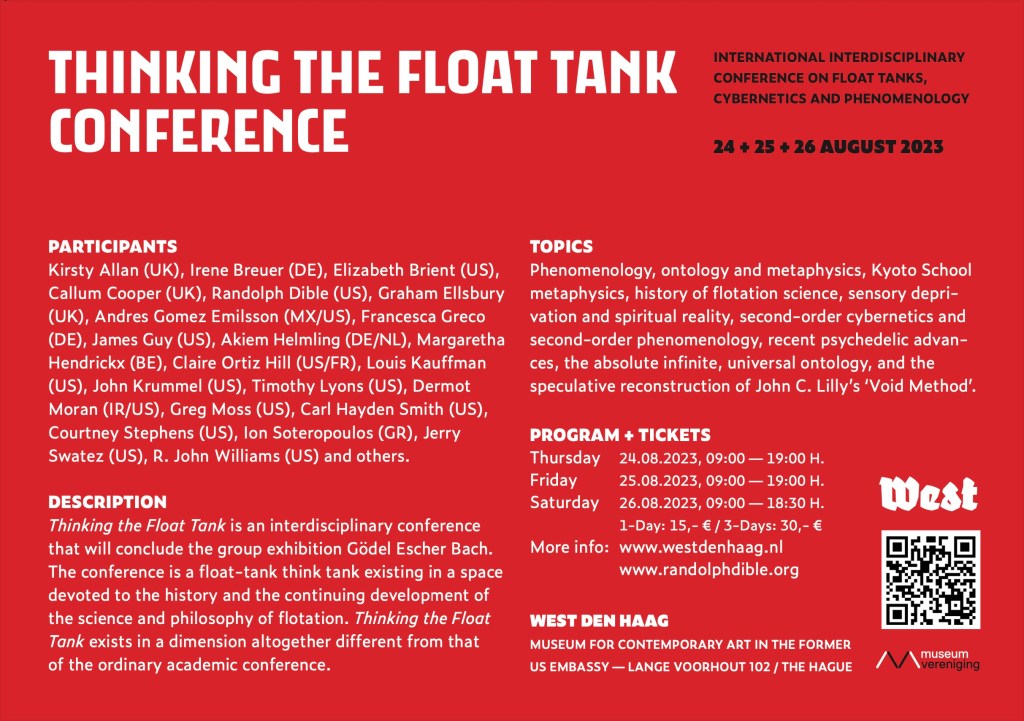
Description: Thinking the Float Tank is an interdisciplinary conference that will keynote the group exhibition Gödel, Escher, Bach (May 19 – August 27, 2023) at the contemporary art museum West Den Haag in The Hague, The Netherlands. The artistic exhibition Gödel, Escher, Bach is based on the theme of self-reference, which Douglas Hofstadter’s famous book of the same title highlights. Thinking the Float Tank is a float-tank think tank existing in a space devoted to the history and the continuing development of the science and philosophy of flotation. See pictures of the exhibit here: Gödel, Escher, Bach. Thinking the Float Tank exists in a dimension altogether different from that of the ordinary academic conference.

Note: All proceedings will be recorded and published to YouTube.

Program for Thinking the Float Tank

DAY 1

Thursday, August 24, 2023

9:00 AM – 9:20 – Registration and Coffee

9:20 AM – 9:40 AM – Randolph Dible – Interdisciplinarity and First Philosophy – (20 minutes)

9:40 AM – 10:00 AM – Akiem Helmling – Introduction to “Thinking the Float Tank” and the Group Exhibit Gödel, Escher, Bach – (20 minutes)

10:00 AM – 10:10 AM – 10 Minute Break

10:10 AM – 10:50 AM – Randolph Dible – Second-Order Cybernetics and Second-Order Phenomenology – (40 minutes)

10:50 AM – 11:00 AM – 10 Minute Break

Keynote: From Mathematics to Metaphysics

11:00 AM – 12:20 PM – Keynote: Claire Ortiz Hill – Metaphysics Seizes Possession of Georg Cantor’s Soul, a Journey through His Psyche – (1 hour 20 minutes)

12:20 PM – 1:50 PM – Lunch

Panel: Kyoto Immersion

1:50 PM – 2:30 PM – Francesca Greco – Shapes of Nothingness—Countless Relations: A World of Floating Boundaries – (40 minutes)

2:30 PM – 3:10 PM – John Krummel – Self-Awareness in Nishida and Beyond: Auto-determination of the Indeterminate as Reflection and Inter-reflection (hybrid) – (40 minutes)

3:10 PM – 3:20 PM – 10 Minute Break

Keynote: Phenomenological Teleology

3:20 PM – 4:40 PM – Keynote: Irene Breuer – Limit Phenomena: Primal Hyle, Consciousness, and God as the Constituents of a Phenomenological Teleology – (1 hour 20 minutes)

4:40 PM – 5:00 PM – 20 Minute Break

Keynote: The Primordial Sphere of Ownness

5:00 PM – 6:20 PM – Keynote: Dermot Moran – The Nature of Self-Experience, Husserl’s Sphere of Ownness and the Experience of the Flotation Tank – (hybrid) – (1 hour 20 minutes)

DAY 2

Friday, August 25, 2023

9:00 AM – 9:15 AM – Coffee

9:15 AM – 9:30 AM – Briefing: Randolph Dible on the “Void Method” – (15 minutes)

9:30 AM – 10:10 AM – Timothy Lyons – Sinking into the Prima Materia – (40 minutes)

10:10 AM – 10:50 – Jerry Swatez – You are Your Own Boundary Condition – (hybrid) – (40 minutes) 

10:50 AM – 11:30 – Workshop: Form and Void: Part I. Moderated by Randolph Dible – (40 minutes)

11:30 AM – 1:00 PM – Lunch

1:00 PM – 1:40 PM – Greg Moss – The Problem of Impure Experience: Nishida and the Origin of Intentionality – (hybrid) – (40 minutes) 

1:40 PM – 2:20 PM – Margaretha Hendrickx on Gestalt Switching – (hybrid) – (40 minutes) 

2:20 PM – 2:30 PM – 10 Minute Break

Panel: Sensory Deprivation and Spiritual Reality

2:30 PM – 3:10 PM – Kirsty Allan on Parapsychological Uses of the Float Tank – (40 minutes)

3:10 PM – 3:50 PM – Callum Cooper on Paranormal Reality – (40 minutes)

3:50 PM – 4:00 PM – 10 Minute Break

4:00 PM – 4:40 PM – James Guy – Metaspheric Perspective – (hybrid) – (40 minutes)

4:40 PM – 4:50 PM – 10 Minute Break

Keynote: The Infinite Sphere

4:50 PM – 6:10 PM – Keynote: Elizabeth Brient – The Infinite Sphere as Think Tank: Suspension (of the finite/ in the infinite/ of the infinite in the finite) as Meditative Praxis” – (1 hour 20 minutes)

DAY 3

Saturday, August 26, 2023

9:00 AM – 9:15 – Coffee

Panel: History of Flotation Science in John Lilly’s Milieu

9:15 AM – 9:55 AM – R. John Williams on the 1973 Esalen Conference – (40 minutes)

9:55 AM – 10:35 AM – Courtney Stephens – John C. Lilly and the Float Tank: From “human agents” to Altered States – (hybrid) – (40 minutes)

10:35 AM – 10:45 AM – 10 Minute Break

10:45 AM – 12:05 PM – Workshop: Form and Void: Part II. Moderated by Jerry Swatez and Randolph Dible – (1 hour 20)

12:05 PM – 1:35 PM – Lunch

Panel: Recent Psychedelic Work

1:35 PM – 2:15 PM – Carl Hayden Smith – DMTx as a Form of Transhuman Technology – (40 minutes)

2:15 PM – 2:55 PM – Andres Gomez Emilsson – Neural Field Annealing – (hybrid) – (40 minutes)

2:55 PM – 3:05 PM – 10 Minute Break

Panel: On George Spencer-Brown’s Laws of Form

3:05 PM – 3:45 PM – Graham Ellsbury on Gödel, Wittgenstein, and Laws of Form – (40 minutes)

3:45 PM – 4:25 PM – Lou KauffmanLaws of Form and the Cheshire Cat – (hybrid) – (40 minutes)

4:25 – 4:35 PM – 10 Minute Break

Keynote: The Infinite Whole

4:35 PM – 5:55 PM – Keynote: Ion Soteropoulos – The Inductive Construction of the Universe qua Infinite Whole – (1 hour 20)

5:55 PM – 6:10 PM – Closing Remarks – (15 minutes)

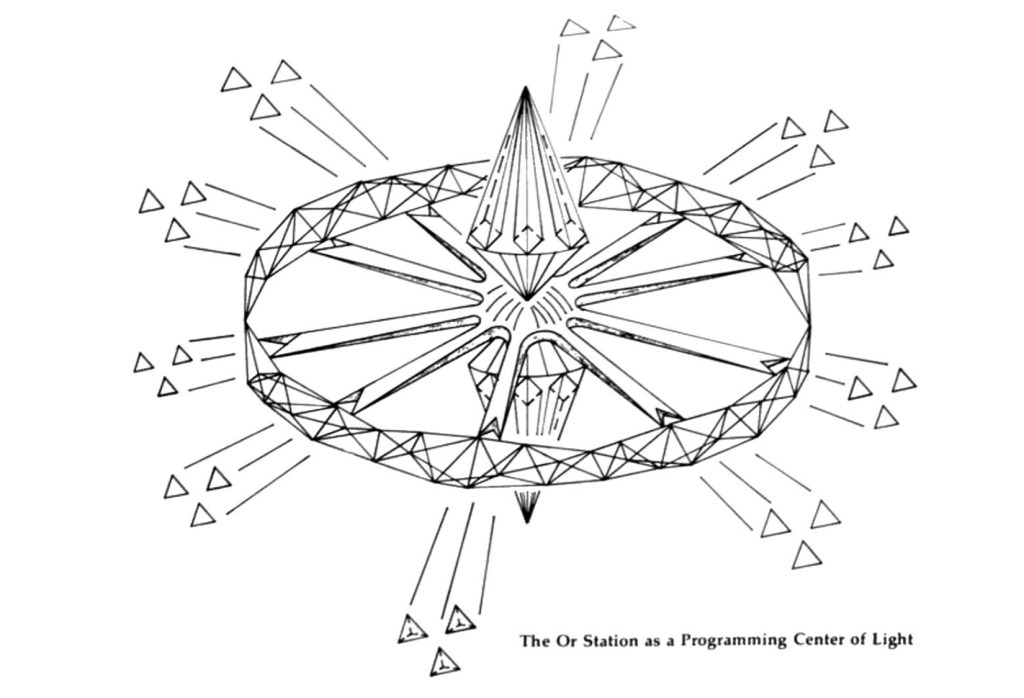
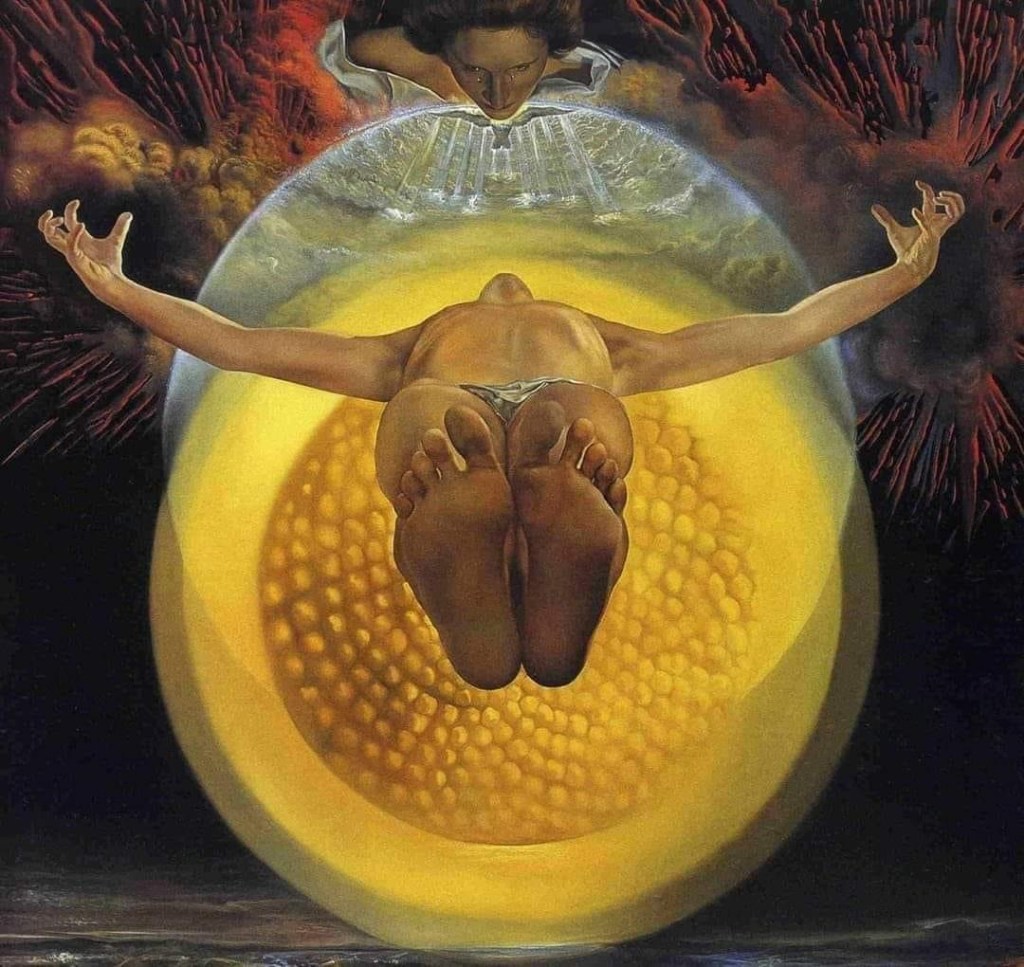
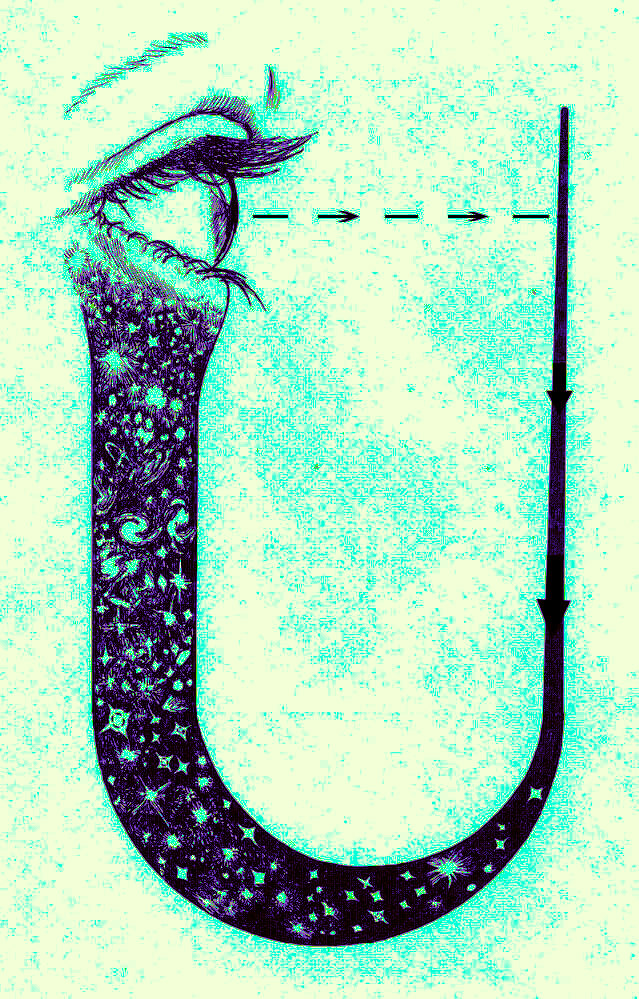
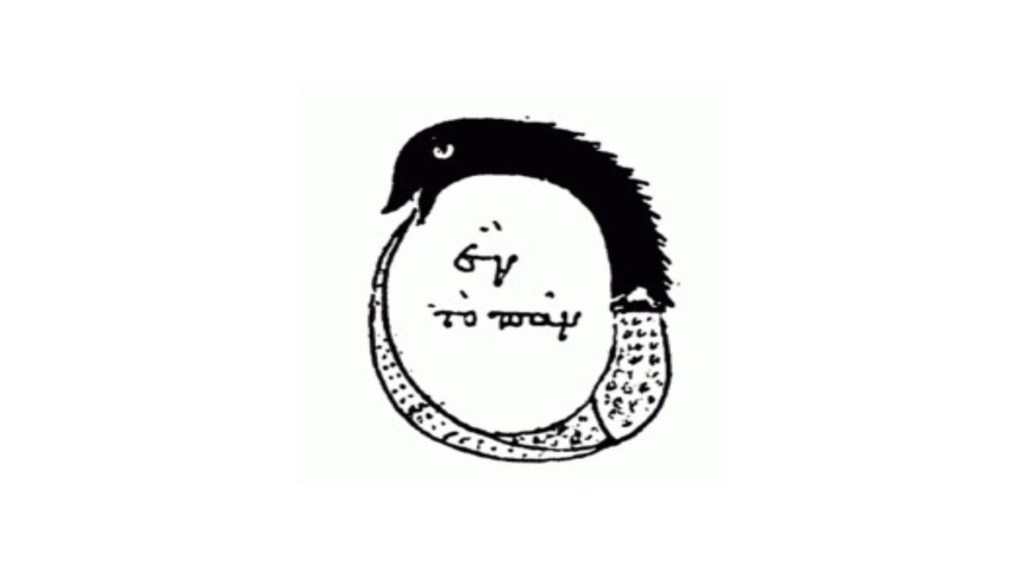
image: J. J. Hurtak, The Book of Knowledge: The Keys of Enoch, 1977, p. 219  

Extended Conference Description

Thinking the Float Tank: AUM Fiftieth Anniversary Conference; Cybernetics, Float Tanks, and Phenomenology Since the 1973 Esalen Institute Conference

What frame of reference is self-reference? The isolation of self-reference, the limit-experience of embarking upon the formless void, and the re-entry of the form into itself, are all key themes in the history and philosophy of flotation. These themes of self-reference, void, and re-entry, as well as space, infinity, awareness, completeness, reality, dimensionality, cosmology, eternity, and creation, are all powerfully operative in the frame presented by the float tank. The float tank, isolation tank, or sensory deprivation chamber, is a technology of the self, but also a means of phenomenological reduction. It can also be a vehicle or a portal.

Historical Context

Fifty years ago John Lilly and Alan Watts brought the mathematician George Spencer-Brown to the Esalen Institute in California for a conference called the American University of Masters Conference, or AUM Conference. Audio recordings of the conference are available on SoundCloud here, and a recent publication of the transcripts can be found in the Journal of Cybernetics and Human Knowing here. The AUM Conference, and the Form and Void Conference series in the following years (1974 and 1975), marked a turning point in the history of cybernetics and systems science because it was the place where many luminaries gathered and received the wisdom of Spencer-Brown’s 1969 book Laws of Form. Alan Watts was already into Laws of Form, having written a chapter about it in his mountain journal Cloud-Hidden, Whereabouts Unknown (1971), but it was John Lilly’s use of Laws of Form in the float tank as a guidebook to traveling between universes that established the AUM Conference as the founding event of a new kind of scientific culture. This revolution knocked science of consciousness into the first person, and Lilly captured that spirit in the frame of the float tank.

Workshop: Reconstructing the “Void Method

Thinking the Float Tank includes a workshop component dedicated to the reconstruct of Lilly’s use of Laws of Form in the float tank, which is what Lilly referred to as the “void method.” The workshop, led by the conference curator Randolph Dible and by one of Lilly’s original workshop participants, Jerry Swatez, will aim to regenerate the essence of Lilly’s void method as well as a more robust cybernetic and phenomenological version of Lilly’s flotation science by harnessing advanced philosophical techniques that were not available to Lilly in the early days of flotation.

NULL OBJECT

Thinking the Float Tank will conclude the Gödel, Escher, Bach group exhibit as one of five sections devoted to self-reference. The conference exists within this larger context, and so does its corresponding flotation museum exhibit. The artistic exhibit will feature pictures, schematic drawings, and other artifacts from the history of flotation, and will also share its space with the NULL OBJECT by Gustav Metzger: http://londonfieldworks.com/Project-2-NULL-OBJECT%3A-Gustav-Metzger-thinks-about-nothing

See also: Audio Tour of the Exhibition

Our Very Own Flotation Tank, and Publications

Tucked away from the exhibited art lies an isolated isolation chamber–our very own float tank–built by Lorenz and Nikolai Beckmann. This float tank exists for the purpose of granting spectators, participants, and tourists the profound experience of flotation in the context of the conference. Presentations will be recorded and disseminated by the team of philosopher-artists at West Den Haag, the philosophical-scientific texts resulting from this conference will be published in a special issue of the new journal Distinction: Journal of Form (the journal of the George Spencer-Brown Society, published by College Publications, Ltd.), and a booklet or reader more accessible to a general audience will also be produced by West Den Haag (like West Den Haag’s Laws of Form publication).

Here is the West Den Haag page for the Float Tank Sessions: http://www.westdenhaag.nl/exhibitions/23_06_Goedel_Escher_Bach/more3

Register to float at the Eventbrite page here: https://www.eventbrite.nl/e/tickets-floatation-tank-book-your-session-630874130507?aff=oddtdtcreator

Topics

Topics addressed by the conference include: phenomenology, ontology, and metaphysics, Kyoto School metaphysics, history of flotation science in John Lilly’s milieu, sensory deprivation and spiritual reality, second-order cybernetics and second-order phenomenology, recent psychedelic advances, the absolute infinite, universal ontology, and the speculative reconstruction of John Lilly’s “Void Method.”

Sources

Sources for these topics include: John Lilly’s metaprogramming paradigm, Edmund Husserl’s phenomenological metaphysics, Eugen Fink’s second-order phenomenology, Heinz von Foerster’s second-order cybernetics, Theodor Conrad’s phenomenological psychology, Hedwig Conrad-Martius’ ontological phenomenology, George Spencer-Brown’s calculus of indications, techniques of meditative absorption, altered states of consciousness, mysticism, theosophy, philosophia perennis, and novel creative mentations.

Follow our news and activities on our Facebook page Float-Tank Think-Tank

https://www.facebook.com/floattankthinktank

Theory of Logical Circumference

Iconic Logic, also called graphical logic and diagrammatic logic, expresses a geometry of logic, and thus it gives us the key to the mysterious relation of the sensible and the insensible, the soul and the mind of soul, the visible and the invisible, etc.

This key opens the path to consciousness of the all-encompassing sphere and its ubiquitous center.

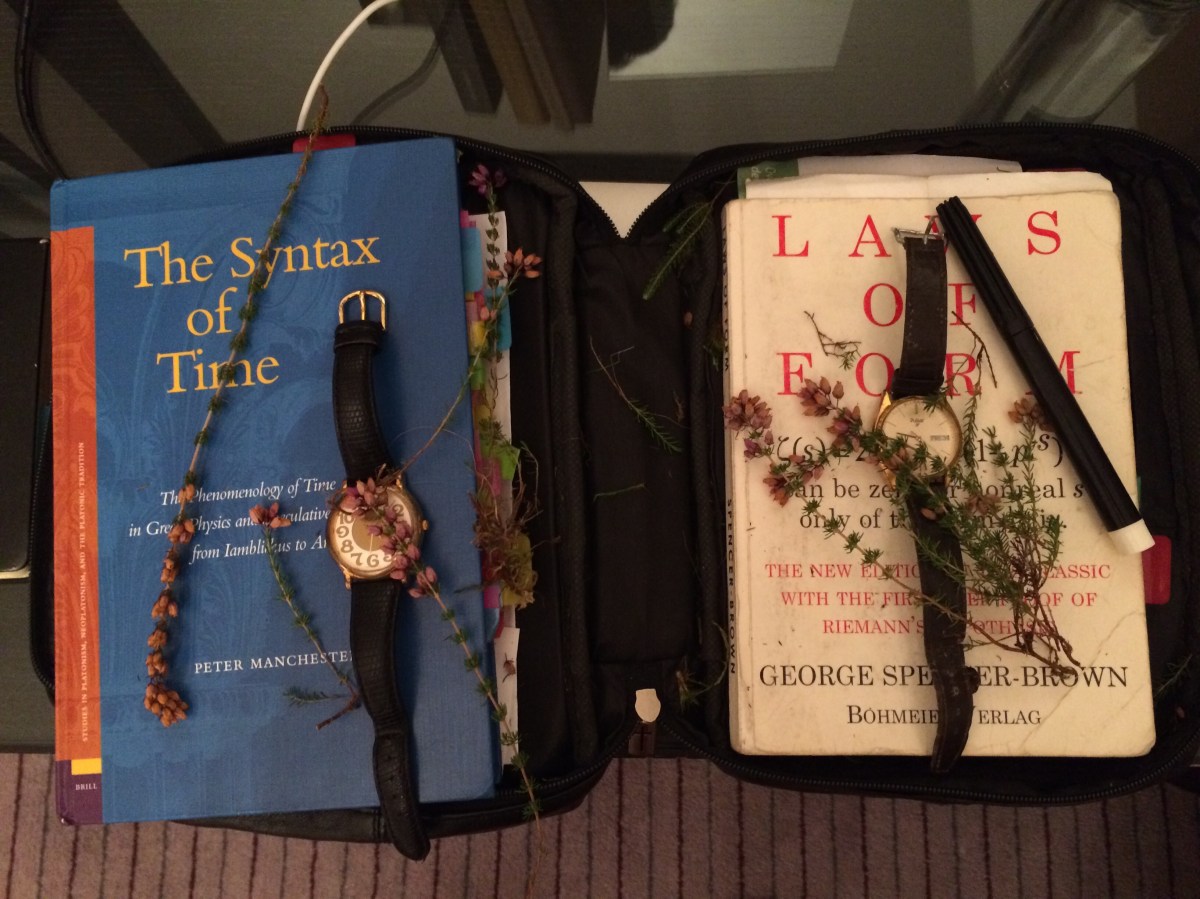
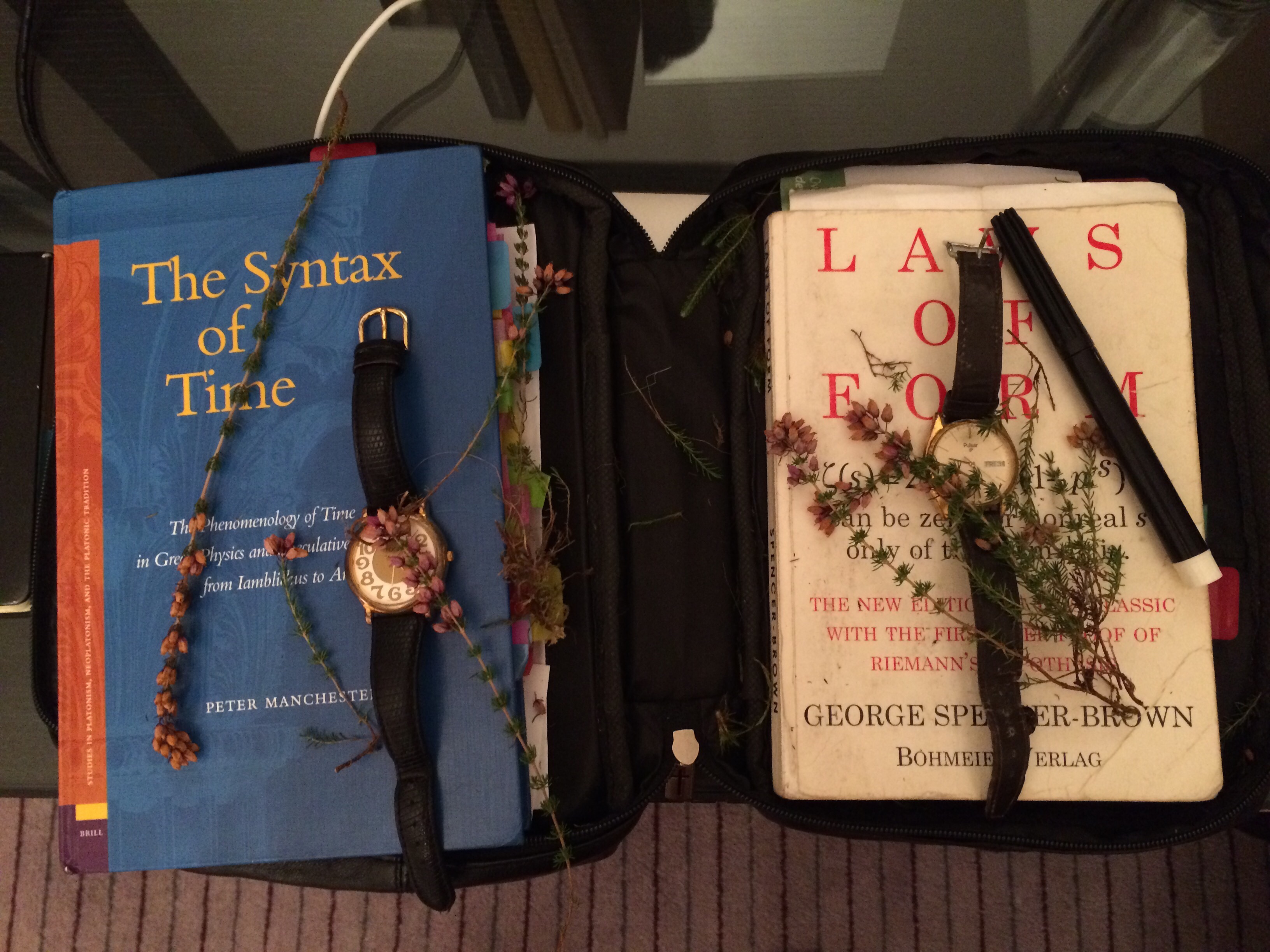
IMG_5175

This key is the bond (the one bond, eis desmos of the Epinomis, etc.) of peras and apeiron implied by the identification of peras and apeiron with, respectively, the center itself and the sphere itself. Peras itself and Apeiron itself exist differently, but let’s think about that later and think now about the significant relation between them. The finite itself can be expressed in terms of determinations, noetic limits, and regardless of the other two modes of existence, these relations (bonds–i.e., between peras and apeiron) are constitutive of our experience in a significant way. This significance is the shining of the first light in conic sections spanning center to periphery, and it expresses the iconic logic that governs the creation of space-time. There are many important implications of this connection, foremost being the famous “time is the moving image of eternity,” wherein the famous “image” is in the original Greek eikon, or icon, in a semantic matrix very similar to that of iconic logic as found in Peirce and Spencer-Brown.

IMG_5176

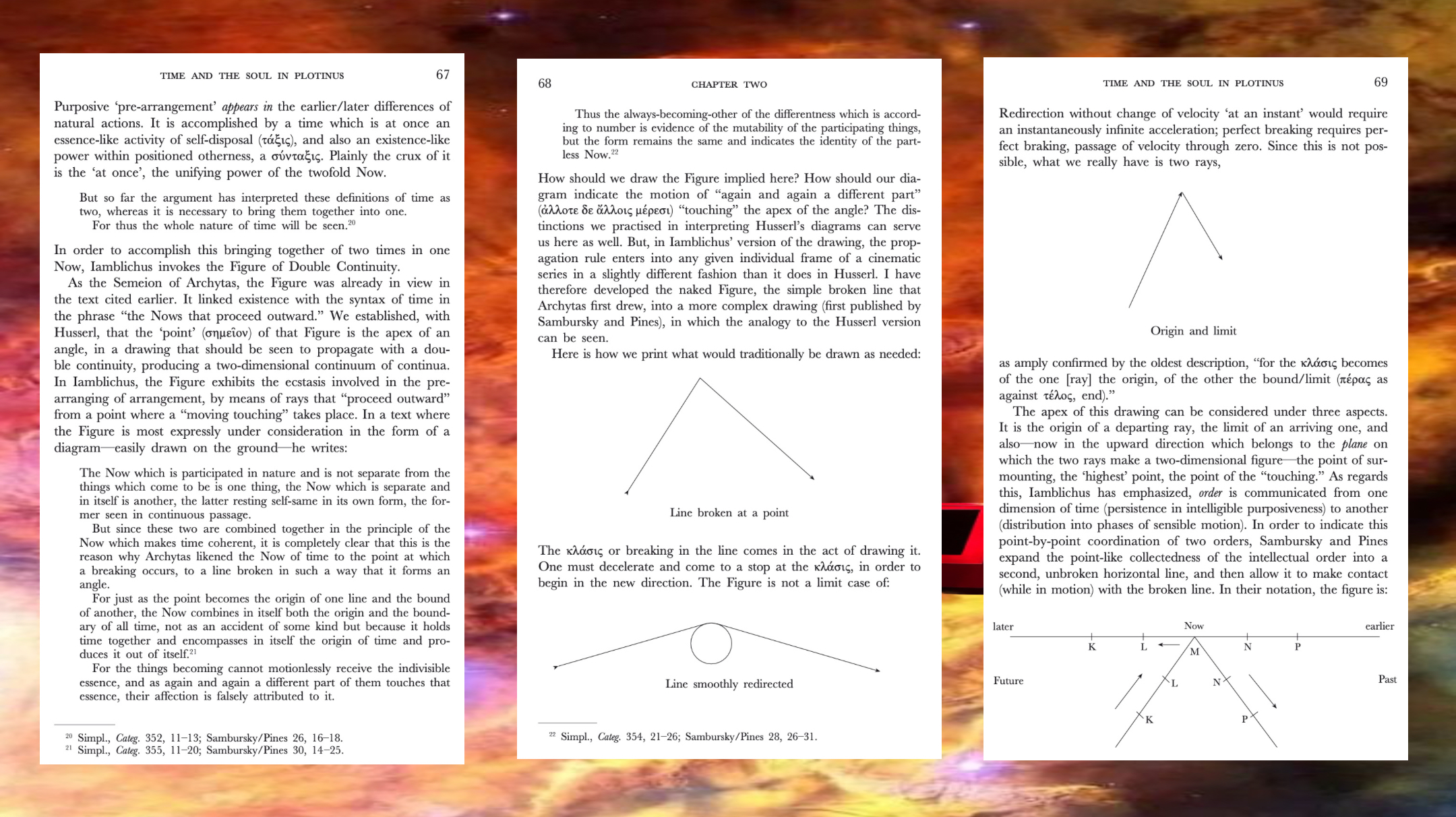
The important thing is not the figure or image that the gramme makes through auto-affective interrelation, but the relation of the gramme to its constitutive breaking (κλάσις, klasis), “where” its formal relation to the beyond of being bestows the power of being according to the form. The possible figurations of form are indefinitely many (aoristos plethos), and of many kinds (orders; according to which there are many compossible likenesses or resemblances or kinds), but this breaking at the apex of the mark, is the principum individuationis of the logical mode of the actual.

The klasis of two continuities (“each in their own dimensions,” following Peter Manchester’s two-ray diagram) is the indication (the locus classicus of this definition of the point is the semeion of Iamblichus’ pseudo-Archytas: see The Syntax of Time) of an actuality, according to the form (eidos) of indication. The two of possibility and actuality are incompossible, but the form of indication (the klasis of the semeion) is constitutive of our experience in the phenomenal disclosure space.

Manchester’s phenomenology of the disclosure space saves the phenomena of our experience by situating its phenomenal spheroidics into a noetic spherics, and if you continue this soteriology, following it to its end (telos), you arrive at a theory of logical circumference: the relativity of conjectural inference breaks through reductions and deductions to the synthetic a priori necessary condition of the possibility of space, time, and causality all in one swoop: in its relation to the center of all centers (which is the One; the unparticipated One, the amethektikon, the hypostatic One, the radical unicity of unity: that which there can be only one of, and only once), the beyond of being organizes itself into an necessarily infinite sphere, in relation to the one.

This infinite sphere–the Stoic Neoplatonic “Sphere of the All,” more strictly Plotinian “Sphere of the All-One,” the cosmic sphere of Empedocles, the sphere of the formalization of ontology after Parmenides, and primarily the Pythagorean harmony of the sphere, perhaps with emphasis on the significance of mystical symmetria–both has ancient precedents and has a long heritage, but its ancient and perennial wisdom is encapsulated in itself, as its own emblem of power, or ousia-potentia, of the sphere itself.

The circle has acquired the symbolism of eternity or timelessness, but the fullness of the sphere itself unconditioned by any dimensionality (the n-dimensional sphere, or with some paradox, dimensionless sphere) is the emblem of the perfect continence or all-encompassment of an all-inclusive and transcendentally pure self-referentiality of being, or ontological closure.

This long-winded explanation of the utter simplicity of the sphere will come more clearly and concisely when we meditate on other simplicities such as the radically One essence of oneness, or the non-being of pure and radical nothingness, or the overwhelming over-flowingness of the beyond of being in the idea of the infinite. The sphere, in this context, is the reality of the relation between the center of All and the All-periphery. Such a sphere is not only formal, and not merely material.

Peter Manchester’s definition of the disclosure space gives the best formulation of such an all-inclusive sphericity: “an all-encompassing self-referential equality of an intentional kind–a disclosure space” (The Syntax of Time, 53).

Before Manchester’s book opened up my own philosophical development with its sphere-framework, I had always thought of the ultimate and penultimate realities–the two modes of existence referred to earlier–as pure subjectivity and pure objectivity.

While we find recognition of the contemporary emergence of paradoxes of subjectivity and self-reference in the philosophy of logical positivism (as Russell’s paradox, “this statement is false”), and in the phenomenological critiques of psychology (both in Husserl’s Crisis, and the Merleau-Ponty’s Phenomenology of Perception), the concrete materiality of the real external world is not seen to connect with such a strange concept as pure objectivity, conceived as the fullness of prote hyle, except perhaps in the realistic phenomenology of Conrad-Martius, and this only because of the seemingly circuitous route of the apeiron of the aether theory.

Such an alien concept as pure objectivity in its hyletic and axiological fullness could be seen in the philosophy of religion, but an ideal surplus or reservoir is usually only encountered in what Ricoeur calls “positive hermeneutics” (such as Hegel’s, or Ricoeur’s (borrowing its “surplus of meaning” from Jean Nabert’s “primary affirmation” or “originary positivity”), dealing with hope, love, and such “undeconstructibles,” as even Derrida can see), but critique (opposite conviction), reflection (opposite speculation), and the like dominate in the popularities of American Continental philosophy because of the hatred of religion, the accusation of idealism, which is not entirely misguided, but certainly endemic. This situation is clear in the contemporary refutation of mysticism as obscurantism.

My hope is that this problem in the contemporary philosophical scene is sufficiently iconic of the eclipse of noetic intuition and synthesis (the eclipse of the light of the hypercosmic sun) by the dianoetic (dialectical noesis, which can only hold one thought at a time and place) grammar (the gramme or line being paradigmatic of dianoetic or “intellectual,” single-term-processing thought). In the history of ideas, the staging is set for the return of the paradigm of the sphere through the sphere of the paradigm.

The Sphere of the All is also called by Sambursky and Pines (The Concept of Time in Late Neoplatonism) the “Sphere of the Paradigm,” meaning the sphere of the eternal paradigms or models of the things that appear down here as the mere images (once again, the Greek is eikon!). In the contemporary scholarship of ancient Greek philosophy, the paradigms (models or eternal realities) or forms are approached inductively, that is, through generalization, from particulars (this Poland Spring water bottle, etc.) to generalities or essentialities (wesenheit, in Hering’s theory of forms) called eternal forms or essences.

The naive charge of Platonism applies to the absurd notion of a separate (chorismos) realm (specifically, the kosmos noetos) or heaven (ouranos; but contemporary philosophers are barred from heaven-speculation and God-talk!) of universals–which seem, after all, to be idealistic abstractions, and thus absurdities, and in sharpest resolution, incompossibilities!–but if the forms in their multiplicity are arrived at deductively from an even greater simplicity, and the multiplicity (plethos) itself is accounted for arithmetically (Plato’s arithmos eide), just as the real realm of space and time derives from a more ultimate reality or more elegant conception of symmetry breaking in higher dimensions, then, the forms can be understood to be inter-coherent, inter-dependent realities, not merely ideal, but “paradigmatic” in a semantic polyfunctionality.

Such “paradigmatics” should be seen in Husserl’s “higher theory of forms” (that is also a theory of theory-forms) or “theory of pure syntaxes” (Formal and Transcendental Logic) as well as in Manchester’s The Syntax of Time, which incidentally we might take to calling “Syntax,” placing it in line with the cosmology of Ptolemy.

There is much to explain here–this whole blog enterprise is an evolving (and editable!) brainstorm for my cyclonic paradigm. Perhaps next we’ll look at a “theory of logical circumference” in terms of the Neoplatonic sphere gestalt after the Timaeus and Proclus, and Fichte’s “originary geometry.” I intend to add links to the papers I’m reading, references, etc! Check back soonish!

Phenomenological Philosophy and Contemporary Mystical Insight

At the periphery of phenomenological philosophy lie powerful connections to the ancient and perennial wisdom indicating philosophy’s greatest vocation.

Some philosophers have emphasized the ancient precedents to pure phenomenology, a phrase coming from Burt C. Hopkins, the permanent secretary of the Husserl Circle. The importance of phenomenology’s ancient roots is also emphasized, for instance, by Robert Sokolowski, who appreciates the significance of the aoristos dyas or Indefinite Dyad for phenomenological philosophy. Philosophers working at the intersection of phenomenology and Ancient Greek philosophy have recognized the paradigmatic place of phenomenological philosophy in the broader history of ideas, but few contemporary scholars have fleshed it all out in a way that recognizes phenomenology itself in the ancient world.

The reduction to essences conveys eidetic insight, but it is important to recognize that the eide were once conceived as the mutually co-arising noetic indications of the total cosmos–the pure actualization of ideal beingness as well as its powers–the kosmos noetos.

Consciousness of essence once indicated a real cosmic structure governing all things: the real central intelligence agency. This direction of research supports convergence of meontological foundations (from the Greek μή-ὄν, me-on; non-being) in diverse areas of being as well as diverse areas of research. The non-distinction of astro-theology from ancient physics, for example, is worth considering very deeply. Contemporary categories of thought tend to be shaped by the distinctively modern secular and naturalistic attitude, which shuts down the dimension of spiritual insight by insisting upon artificial blinders keeping the horizons of the modern mind in its planet-side compartments of functioning. The trans-natural aspects of life itself and its logical power are hidden from view by human artifice. But thanks to a wealth of contemporary metaphysical syncretisms the universal significance of such foundational limit-concepts as nothingness, being itself, and the absolute infinite, are no longer hidden from view. Researchers are already moving in these directions.

Phenomenological scientific philosophy as a spiritual means of revelation and discovery is not unprecedented. Neither is the mathematical mysticism that underlies it, nor the cosmic agency which guides it. All these things are universal and forever universally available.

By sharing the philosophy inspired by phenomenological philosophers—especially four key philosophers: Peter Byrne Manchester, Hedwig Conrad-Martius, Anna-Teresa Tymieniecka, and George Spencer-Brown—I will show how contemporary mystical insight into reality can be achieved today and can guide us to the great vision of the overlooked simplicity of ultimate reality.